


How to study a song without tiring the voice
Separate reading, rhythm and singing to learn more without repeating the entire music dozens of times.
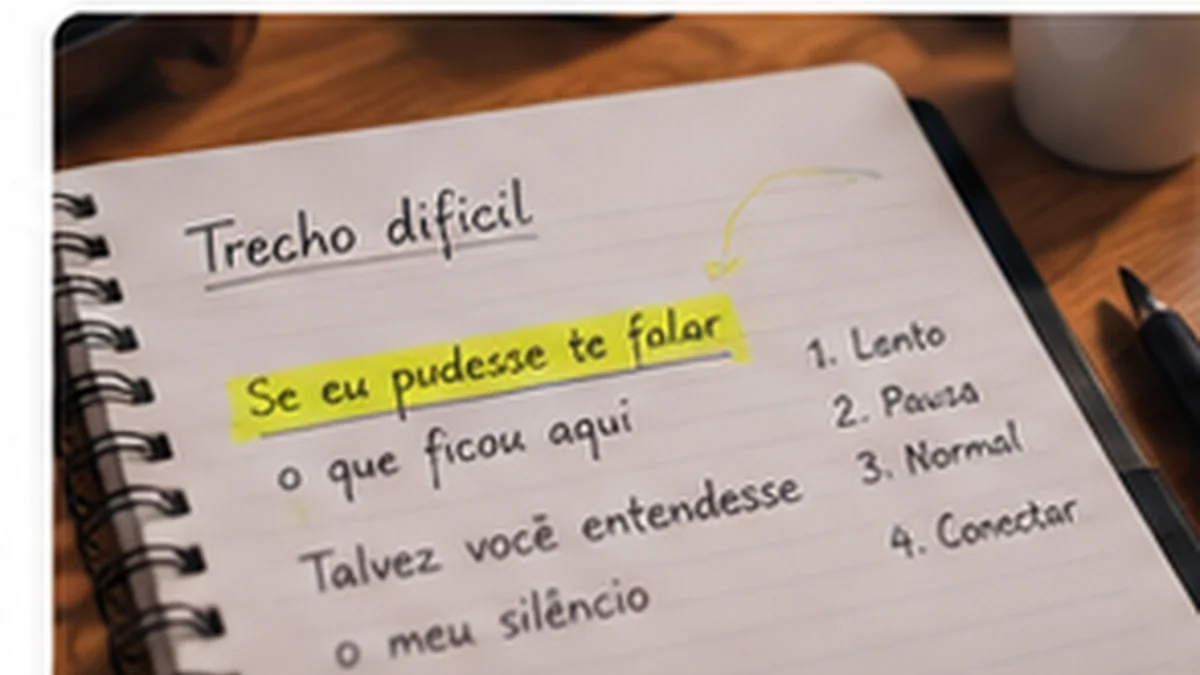
Repeating the whole song every time something goes wrong usually spends time and voice. The study becomes more efficient when you separate understanding, rhythm and singing and use the voice only when it is really needed.
Split the study into three layers
- Lyrics: read without singing and mark repetitions, difficult words and section changes.
- Rhythm: Speak the lyrics on the music's wrist, beating time with your hand or using metronome.
- Voice: Sing only after the lyrics and rhythm are clear.
Use blocks instead of the whole song
When a snippet fails, isolate from one to two lines. Do two or three repetitions carefully, rest a few seconds and connect the passage to the previous sentence and to the next. Just then go back to the whole song.
Signs that you're passing the point.
Loss of clarity, desire to increase the volume to “fix”, rigid jaw and notes that begin to become less stable are signs to reduce the load. A short break usually yields more than ten bad repetitions.
If you have repeated it three times in the same way and the error continues, change the strategy: reduce the snippet, reduce the tempo or work the speech before singing.
Today's Practice
Choose a repertoire song and study 10 minutes using just 3 minutes of real singing. Use the rest for lyrics, rhythms and markings.
LETROU content is educational and does not replace assessment by a vocal coach or healthcare professional. Persistent pain or discomfort while singing should be assessed.